Role of Artificial Intelligence in Autonomous Vehicles
Introduction
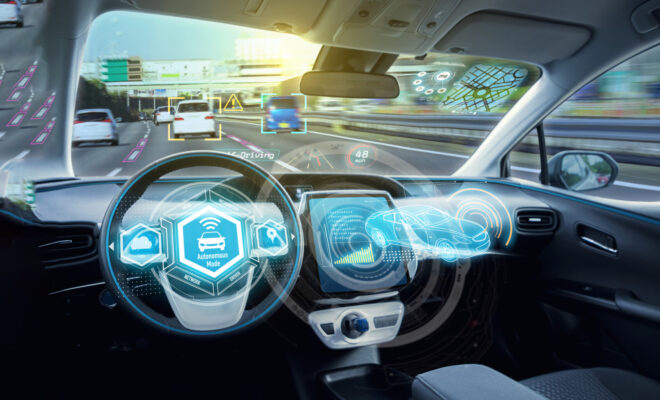
Artificial intelligence has become the foundation of autonomous vehicle technology. It enables vehicles to interpret surroundings, make driving decisions, and respond to changing road conditions without human intervention. As transportation systems move toward automation, artificial intelligence plays a central role in improving safety, efficiency, and mobility across modern infrastructure.
Autonomous vehicles rely on intelligent algorithms that process large volumes of environmental data in real time. These systems combine sensors, machine learning models, and decision making frameworks to operate vehicles independently. The integration of artificial intelligence into transportation is reshaping how people travel, how cities manage traffic, and how logistics networks function.
Understanding the role of artificial intelligence in autonomous vehicles helps explain why this technology represents one of the most important innovations in modern mobility systems.
What Are Autonomous Vehicles
Autonomous vehicles are transportation systems capable of navigating roads with minimal or no human involvement. These vehicles rely on intelligent computing systems rather than traditional driver control mechanisms.
Key capabilities include:
- detecting surrounding objects
- recognizing road signs and signals
- predicting movement of nearby vehicles
- planning safe driving paths
- responding to unexpected road conditions
Artificial intelligence enables these capabilities by transforming raw sensor data into actionable driving decisions.
Why Artificial Intelligence Is Essential for Autonomous Driving
Driving requires continuous interpretation of complex environments. Human drivers rely on experience and perception to make decisions quickly. Autonomous vehicles depend on artificial intelligence to replicate and improve these abilities.
Artificial intelligence supports autonomous driving by:
- processing real time environmental data
- identifying obstacles accurately
- predicting traffic behavior patterns
- adjusting vehicle speed dynamically
- improving navigation efficiency
Without artificial intelligence, vehicles would not be able to interpret surroundings or respond appropriately to road conditions.
Core Artificial Intelligence Technologies Used in Autonomous Vehicles
Autonomous driving systems combine multiple artificial intelligence techniques that work together to create safe navigation environments.
Machine Learning Systems
Machine learning enables vehicles to learn from large datasets and improve performance over time.
Applications include:
- recognizing pedestrians and vehicles
- identifying road markings
- interpreting traffic signals
- predicting driver behavior patterns
Machine learning models continuously improve through exposure to new driving scenarios.
Computer Vision Technology
Computer vision allows vehicles to interpret visual information collected from cameras.
Functions include:
- detecting lane boundaries
- recognizing traffic signs
- identifying road hazards
- monitoring surrounding vehicles
Computer vision transforms image data into structured information that supports safe navigation.
Deep Learning Models
Deep learning systems analyze complex patterns within large datasets to support accurate decision making.
Examples include:
- object classification improvements
- environmental pattern recognition
- behavior prediction modeling
- adaptive route planning
These models enhance reliability in unpredictable driving environments.
Sensor Fusion Techniques
Sensor fusion combines data from multiple sources such as cameras, radar, and lidar systems.
Benefits include:
- improved environmental accuracy
- stronger obstacle detection reliability
- enhanced navigation stability
- reduced interpretation errors
Sensor fusion ensures vehicles maintain awareness of surroundings in diverse conditions.
Role of Artificial Intelligence in Vehicle Perception Systems
Perception systems help autonomous vehicles understand their environment. Artificial intelligence processes information collected from sensors to identify objects and evaluate road conditions.
Perception capabilities include:
- detecting pedestrians and cyclists
- identifying nearby vehicles
- recognizing traffic lights
- interpreting lane markings
- monitoring road surface conditions
Accurate perception supports safe navigation and reduces collision risks.
Artificial Intelligence in Decision Making and Path Planning
Autonomous vehicles must continuously determine safe routes based on environmental conditions. Artificial intelligence enables vehicles to evaluate multiple driving scenarios and choose optimal actions.
Decision making systems support:
- safe lane changes
- intersection navigation
- obstacle avoidance
- adaptive speed control
- emergency response actions
Path planning algorithms ensure vehicles travel efficiently while maintaining safety.
Artificial Intelligence in Vehicle Control Systems
Vehicle control systems translate decisions into physical actions such as steering, braking, and acceleration.
Artificial intelligence enables:
- smooth steering adjustments
- adaptive braking responses
- dynamic acceleration control
- stability during complex maneuvers
These functions ensure vehicles operate safely in real world traffic environments.
Role of Artificial Intelligence in Predictive Traffic Behavior Analysis
Traffic environments involve interactions with unpredictable drivers and pedestrians. Artificial intelligence helps autonomous vehicles anticipate potential hazards before they occur.
Predictive analysis supports:
- forecasting pedestrian movement
- anticipating vehicle lane changes
- detecting sudden braking behavior
- identifying risky driving patterns nearby
This capability improves response time and reduces accident risks.
Artificial Intelligence Supporting Navigation and Mapping Systems
Navigation systems rely on high precision maps and real time updates to guide vehicles safely.
Artificial intelligence enhances navigation by:
- interpreting map data accurately
- updating route conditions dynamically
- identifying construction zones
- adjusting paths during traffic congestion
Smart navigation systems improve travel efficiency and reliability.
Safety Improvements Enabled by Artificial Intelligence
Safety remains the primary motivation behind autonomous vehicle development. Artificial intelligence strengthens safety performance through continuous monitoring and analysis.
Important safety improvements include:
- reduced human error related accidents
- faster hazard detection responses
- consistent driving behavior
- improved reaction time during emergencies
These benefits contribute to safer transportation systems.
Artificial Intelligence in Connected Vehicle Communication
Autonomous vehicles increasingly communicate with surrounding infrastructure and other vehicles. Artificial intelligence manages this communication efficiently.
Communication systems support:
- traffic signal coordination
- vehicle to vehicle information exchange
- road hazard alerts
- congestion management updates
These interactions improve overall transportation network performance.
Role of Artificial Intelligence in Energy Efficiency Optimization
Artificial intelligence helps autonomous vehicles operate more efficiently by optimizing energy consumption patterns.
Examples include:
- selecting fuel efficient routes
- adjusting acceleration patterns
- managing battery performance in electric vehicles
- reducing idle time during congestion
Energy optimization supports sustainable transportation goals.
Challenges Facing Artificial Intelligence in Autonomous Vehicles
Despite significant progress, artificial intelligence systems still face technical and operational challenges.
Important challenges include:
Complex Urban Environments
Cities contain unpredictable situations such as pedestrians crossing unexpectedly and vehicles behaving irregularly.
Artificial intelligence must adapt to:
- crowded intersections
- construction zones
- unusual driving behavior patterns
These environments require advanced perception accuracy.
Data Processing Requirements
Autonomous vehicles generate large volumes of sensor data continuously.
Managing this data requires:
- high performance processors
- efficient storage systems
- optimized communication networks
Infrastructure improvements support reliable performance.
Ethical Decision Making Scenarios
Autonomous vehicles sometimes encounter situations requiring complex decision evaluation.
Artificial intelligence developers continue improving frameworks that support safe and responsible decision outcomes.
Regulatory Considerations Affecting Artificial Intelligence Deployment
Government regulations influence how autonomous vehicle systems are tested and deployed. Safety standards ensure artificial intelligence operates reliably in public environments.
Regulatory priorities include:
- testing requirements before public deployment
- safety certification procedures
- liability considerations
- operational transparency expectations
These frameworks support responsible technology adoption.
Future Trends in Artificial Intelligence Driven Autonomous Vehicles
Artificial intelligence continues evolving alongside advances in computing power and connectivity technologies.
Future developments include:
- improved real time perception accuracy
- stronger integration with smart city infrastructure
- enhanced vehicle coordination systems
- expansion of autonomous delivery networks
- increased adoption of electric autonomous mobility platforms
These innovations will shape the future of transportation systems worldwide.
Conclusion
Artificial intelligence serves as the foundation of autonomous vehicle technology. It enables perception, decision making, navigation, communication, and safety improvements across modern transportation environments. By processing real time data from sensors and infrastructure systems, artificial intelligence allows vehicles to operate independently while maintaining reliability and efficiency.
As research continues advancing and infrastructure improves, artificial intelligence driven autonomous vehicles will play an increasingly important role in shaping safer and more efficient transportation networks. The continued development of intelligent mobility systems represents a major step toward smarter cities and sustainable travel solutions.
FAQ Section
How do autonomous vehicles recognize pedestrians accurately
Autonomous vehicles use computer vision systems combined with machine learning models to identify pedestrian movement patterns and interpret environmental data.
Can artificial intelligence adapt to changing weather conditions during driving
Yes. Artificial intelligence systems analyze sensor inputs to adjust driving behavior during rain, fog, and low visibility conditions.
Are autonomous vehicles capable of learning from previous driving experiences
Machine learning algorithms allow vehicles to improve performance by analyzing historical driving data and recognizing recurring patterns.
How do autonomous vehicles communicate with traffic infrastructure
Vehicles exchange information with smart traffic signals and roadside systems through connected communication networks.
Does artificial intelligence reduce driver fatigue related accidents
Yes. Autonomous systems remove reliance on continuous human attention, reducing fatigue related safety risks.
Can autonomous vehicles operate without internet connectivity
Most autonomous vehicles can perform essential driving tasks locally, though connectivity improves navigation updates and communication features.
What industries benefit most from autonomous vehicle technology
Transportation services, logistics networks, public mobility systems, and smart city infrastructure benefit significantly from autonomous vehicle deployment.

